Link copied!
AI
New Fable 5 can build a dungeon generator — a prompt found on Twitter that tabletop RPG fans will want to try

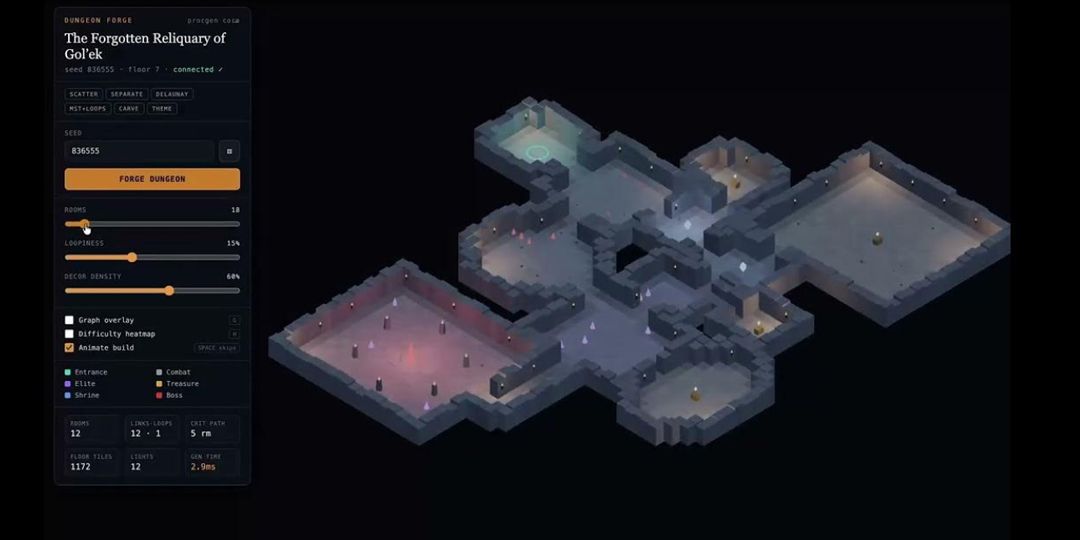
A prompt circulating on Twitter shows Claude Fable 5 generating a fully working dungeon generator, and it’s already catching the attention of tabletop gaming fans. The setup includes a flexible set of parameters: how many rooms the dungeon should have, how linear or maze-like its layout is, and how much and what kind of decor fills each room.
According to users who tested it, the model outputs a working layout in a single pass, without requiring multiple rounds of corrections or follow-up prompts. The generator reportedly produces a text-based map along with a short description of each room, making it easy to use directly at the table during a session.
Some fans have also experimented with adjusting the prompt to add specific themes, such as dungeons built around a particular monster type or environmental hazard. Because the output is plain text, game masters can copy the result straight into their notes or a virtual tabletop tool without extra formatting work.
The approach is being seen as a low-effort way to generate fresh content for one-shot sessions or to quickly fill in a side area during an ongoing campaign.
Single-pass reliability is the real story
It’s worth noting that, as with any AI-generated content, results can vary between runs, so some manual tweaking may still be needed for balance and consistency. The prompt itself is quite long, so it’s been uploaded here rather than posted in full.
What makes this particular prompt notable isn’t the idea of AI-generated dungeons, which tabletop communities have experimented with for years, but the single-pass reliability users are reporting. Most earlier attempts at this kind of generator needed several rounds of follow-up prompting to fix inconsistent room counts or nonsensical layouts.
The parameterized structure — room count, linearity, decor density — is also what makes it reusable rather than a one-off novelty, since a game master can tune those inputs for a quick side dungeon versus a full session centerpiece without rewriting the prompt from scratch.
“
Getting a usable map plus room descriptions on the first try removes most of the friction that kept AI dungeon generators from being a practical at-table tool — DnD fans, give it a try.

Related tags



Share
SUBSCRIBE TO OUR PRIVATE CASES AND USEFUL TIPS
Subscribe to our newsletter, get only exclusive content and weekly digests, no any spam!
By providing my email, I accept the Privacy Policy.